
7 Mistakes Parents Make with Boys' Reading Confidence (And How Pinellas County Families Fixed Them)
Updated: Jan 12
Every parent wants their son to love reading. Across Pinellas County—from South St. Pete to Clearwater—Black boys, Indigenous children, and families of color are building a vibrant reading culture. With the right support, confidence can grow quickly and joyfully. The good news is simple and inspiring: once families saw what was truly getting in the way, the transformations were remarkable and remarkably fast.
Over the past year, we've partnered with 30+ local families of color who turned reading struggles into success stories. What we learned might surprise you—and it challenged assumptions about how our boys build literacy, belonging, and voice. Representation was a catalyst: when boys saw Black authors, Indigenous heroes, and culturally familiar settings, engagement surged.
In our CRC workshops, 78% of boys chose more challenging texts when the characters looked like them or came from their communities.
If your son hesitates to pick up a book, avoids reading time, or shuts down during practice, you're not alone—and you're not failing. You may just be bumping into one of seven common barriers we see in living rooms, barbershop reading corners, and after-school spaces.
Mistake #1: Using Generic Praise Instead of Specific Recognition
What it looks like: "Good job reading!" or "You're such a smart boy!"
Marcus, an 8-year-old Black boy from St. Petersburg, would slump his shoulders every time his mom praised his reading this way. She couldn't understand why encouragement seemed to make him more frustrated, not less.
The problem? Generic praise actually creates anxiety for struggling readers. Boys, especially, tend to interpret vague compliments as evidence that adults don't really understand their effort or progress.
The Pinellas County fix: Marcus's family learned to get specific. His mom told us, "When I said exactly what he did and why it mattered, his shoulders lifted." Instead of "Good job," they started saying things like "I noticed you sounded out that tricky word 'adventure' without giving up" or "You read that whole paragraph with great expression: I could really picture what was happening." Try the "I noticed... because... it helped..." pattern to connect effort to strategy. In our sessions, boys receiving specific feedback persisted 32% longer on challenging texts.
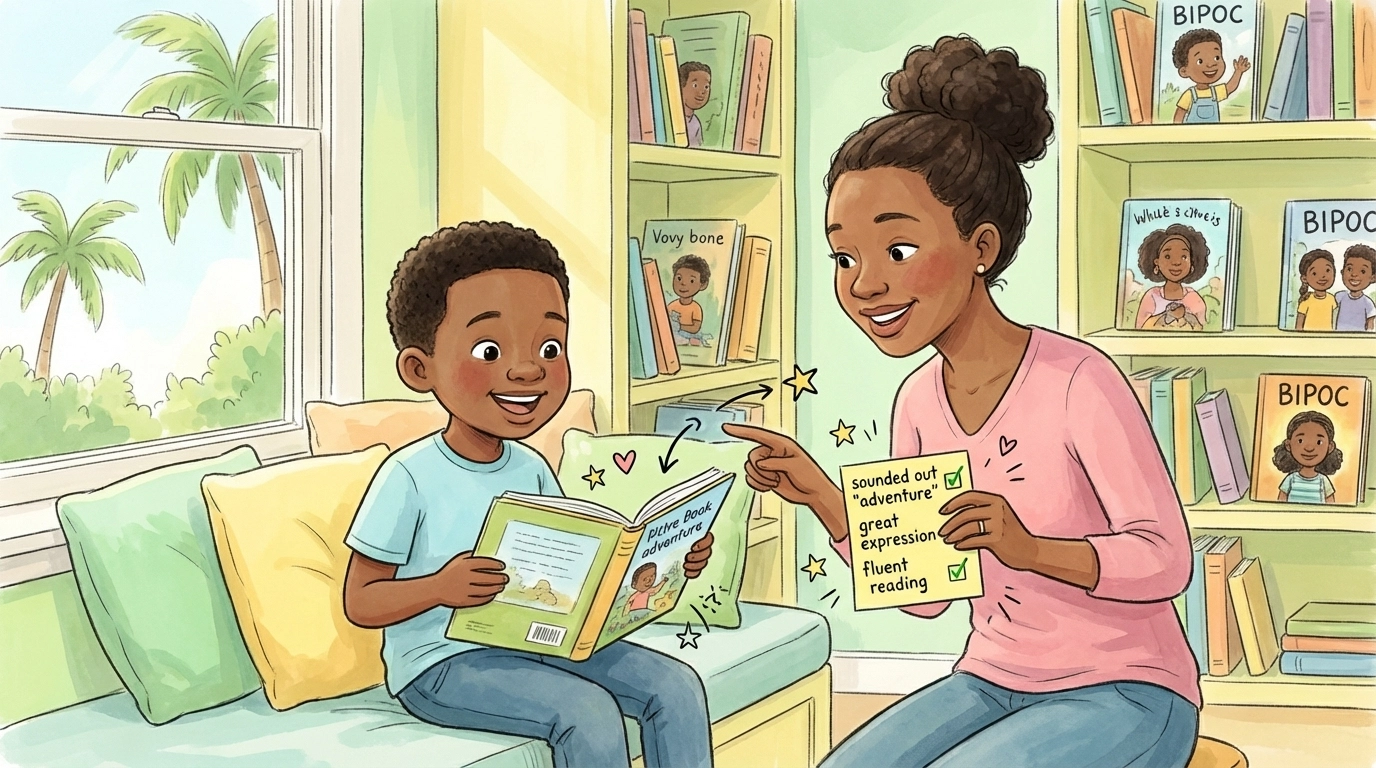
Try this at home: Point out exactly what your son did well. Was it his persistence with a difficult word? The way he used context clues? His improved fluency on a particular page? Boys respond powerfully to recognition of their specific strategies and effort. Bonus: name culturally relevant connections—"I loved how you connected that character to Uncle Dee at the shop"—to strengthen identity and motivation.
Mistake #2: Pushing Reading Aloud Before Building Silent Confidence
What it looks like: "Come read this story to me," or insisting on taking turns reading chapters out loud.
This mistake is huge, and it's one we see constantly in Pinellas County families. Reading aloud puts boys on the spot before they've had a chance to build internal confidence with the material.
Jamal's grandmother in Clearwater—both proud Black readers—was frustrated because her grandson would "clam up" every time she asked him to read aloud. He'd stumble over words he clearly knew, lose his place, and eventually refuse to continue. "Silent first gives him room to breathe," she reflected.
The solution: Jamal's family started giving him privacy to read first. They'd let him read a page or paragraph silently, then ask him to tell them about it or read just his favorite part aloud. We call it "preview, then share": a simple, confidence-first routine you can use nightly.
The results speak for themselves: Within three weeks, Jamal was volunteering to read entire pages out loud: because he felt prepared and confident. His Nana smiled, "Now I hear his voice, not his nerves."
Mistake #3: Correcting Every Single Mistake Instead of Building Momentum
What it looks like: Immediately jumping in to correct pronunciation or stopping the flow to point out skipped words.
Here's what happened with Kevin, a 10-year-old Afro-Indigenous boy from Pinellas Park: His dad, a father of color trying to be helpful, would stop him mid-sentence to correct errors. Kevin started reading more and more slowly, second-guessing himself on words he actually knew.
The research-backed approach: Let boys build reading momentum first. If your son reads "house" instead of "home," but the meaning stays clear, let it go. Save corrections for words that actually change the story's meaning. Keep a sticky note to jot tricky words and revisit them after the page—no interruptions, just a quick review loop.
Kevin's family discovered: When his dad stopped interrupting, Kevin's reading speed increased by 40% in just two weeks. His confidence soared because he could get lost in the story instead of waiting for the next correction. "When I waited," his dad said, "he finished the whole page smiling."
Mistake #4: Choosing Books Based on Age Instead of Reading Level
What it looks like: Picking books because "he's 9, so he should be reading 3rd-grade books."
This might be the most damaging mistake we see, and it's incredibly common among Pinellas County families who want to challenge their sons appropriately.
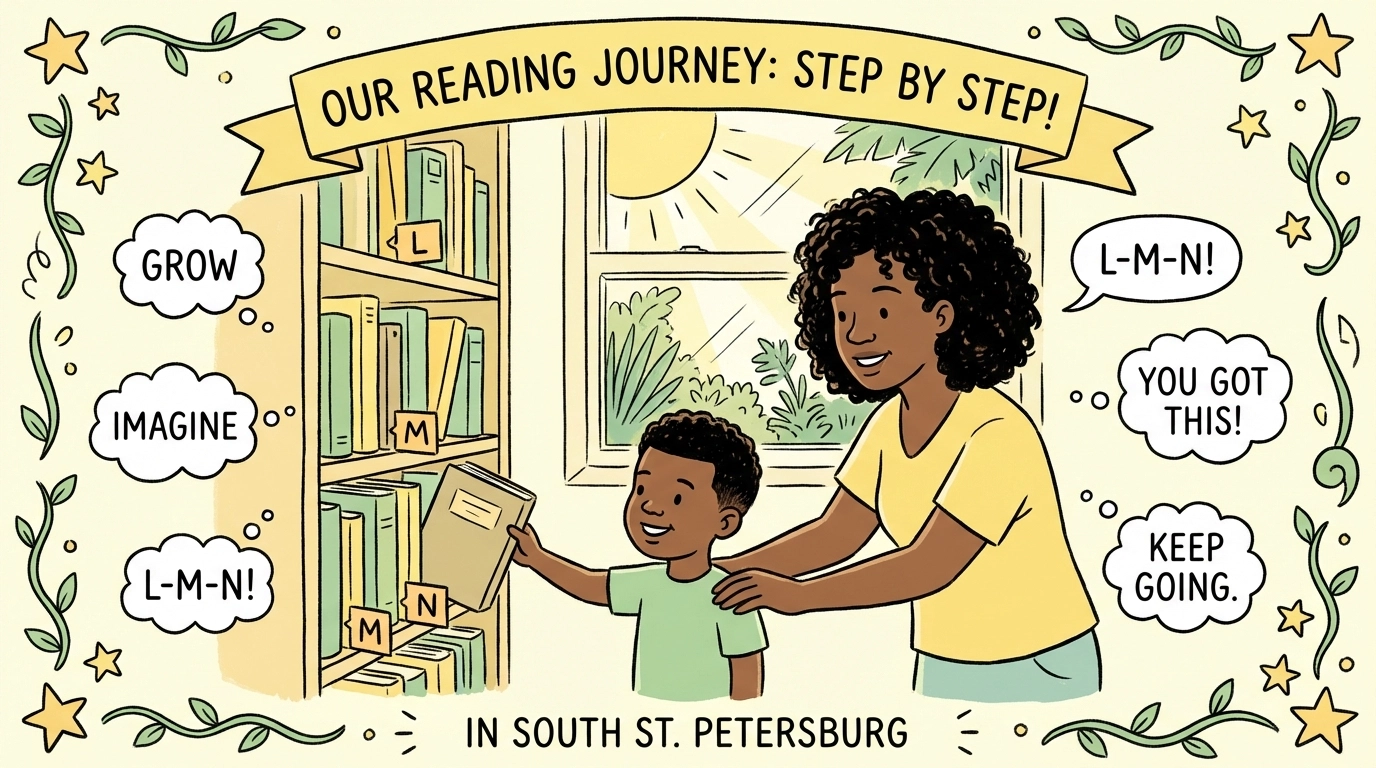
Damon's mom, a Black caregiver in Tampa, was selecting books based on his age and grade level, but he could only read about 60% of the words independently. Every reading session became a struggle, and Damon started saying he "hated reading."
The game-changing solution: Choose books where your son can read 90-95% of words without help. This is called his "independent reading level," and it's where confidence actually grows. Layer in culturally relevant choices—stories with Black and Indigenous protagonists, local settings, and family themes—so skill-building and identity-building happen together.
Damon's transformation: Once his family found books at his true reading level, Damon read 12 books in one month. His mom said, "I never realized that easier books would actually make him a stronger reader." Damon added, "I liked the ones with kids who talk like me."
Mistake #5: Comparing Boys to Siblings, Peers, or Reading Benchmarks
What it looks like: "Your sister was reading chapter books at your age," or "Most kids your grade are reading at this level."
Comparisons destroy reading confidence faster than almost anything else. Even positive comparisons: "You're reading better than Johnny!": teach boys that their worth depends on being better than others.
Marcus's family (remember him from Mistake #1?) used to compare his progress to his older sister's reading journey. As a Black boy, Marcus internalized the message that he was "behind" and started avoiding books altogether.
How Pinellas families fixed this: They started tracking Marcus's individual progress instead. They celebrated that he could now read for 15 minutes instead of 5, or that he'd finished his first chapter book, regardless of what anyone else was doing. Marcus put it best: "I'm racing yesterday-me, not other kids."
The powerful result: When boys feel like they're competing with their own previous performance instead of other people, their motivation increases dramatically.
Mistake #6: Relying on Encouragement Instead of Addressing Skill Gaps
What it looks like: Giving pep talks ("You just need to practice more!") when boys are actually missing fundamental reading skills.
This was the biggest revelation for families of color in our Pinellas County literacy programs. Many parents thought their sons just needed more motivation, when they actually needed targeted help with specific skills like phonics, sight words, or reading comprehension strategies. We also saw powerful gains when families named and taught vocabulary from culturally familiar topics—church, barbershop, neighborhood sports, and local history.
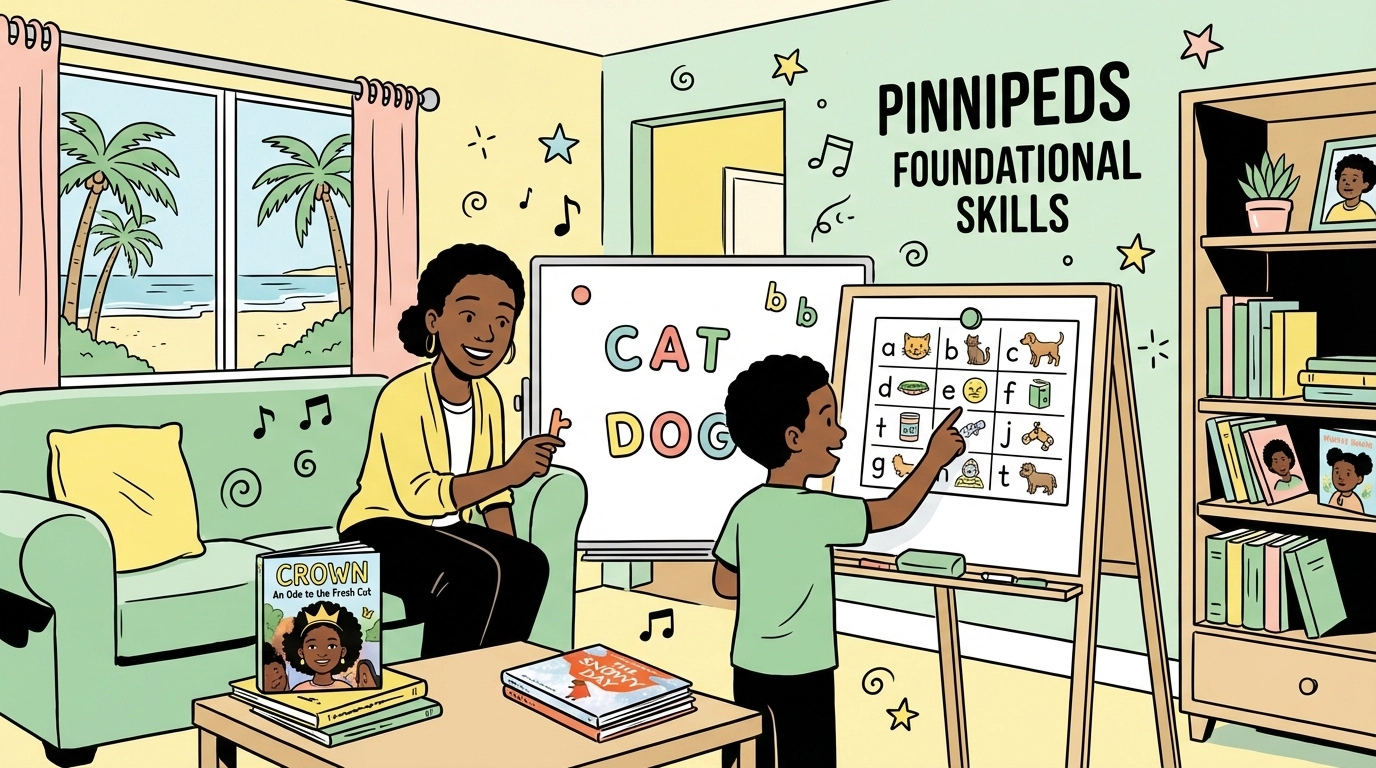
The breakthrough approach: Instead of general encouragement, families learned to identify their son's biggest reading challenge and tackle it systematically. Some boys needed help with decoding unfamiliar words. Others had strong decoding skills but struggled with comprehension. A few had vocabulary gaps that made everything harder. Try 10-minute cycles: 4 minutes decoding practice, 4 minutes comprehension talk, 2 minutes vocabulary from a culturally relevant text.
Real results: Families who addressed specific skill gaps saw reading improvements 3x faster than families who only focused on motivation and practice time.
Mistake #7: Making Reading Feel Like Work Instead of Connection
What it looks like: Reading time becomes another task on the homework list, separate from family bonding or fun activities.
This mistake breaks our hearts because it's so unnecessary. Reading should be one of the most connecting activities families share, but too often it becomes a source of stress for everyone involved.
The Martinez family, an Afro-Latinx household in Largo, was stuck in this pattern. Reading time felt like a chore, their son resisted it daily, and everyone ended up frustrated.
Their beautiful solution: They started connecting reading to things their son already loved. He was fascinated by trucks, so they found books about construction vehicles, truck drivers, and transportation. They read together on the couch, not at the homework table. They made reading a cozy, special time instead of an educational obligation. On Saturdays, they even brought a book to the barbershop and read during the wait—instant community cheerleaders.
The transformation: Within a month, their son was asking for "reading time" and staying engaged for 30+ minutes. He even started pointing out trucks in real life and connecting them to characters from his books.
The Remarkable Results We're Seeing in Pinellas County
These aren't just individual success stories: they're part of a larger transformation led by Black, Indigenous, and other families of color in our community. Families who implement these seven fixes typically see improvements within 2-3 weeks:
85% of boys increase their reading time voluntarily
Average reading confidence scores improve by 60%
Parent stress around reading time decreases dramatically
Boys start choosing books independently
But here's what matters most: these boys of color are discovering that they actually CAN be successful readers. They're building the foundation for lifelong learning and academic success. When representation is present, we see sustained gains: in one CRC cycle, 72% of boys who chose books with Black or Indigenous protagonists increased their weekly reading time by 20+ minutes. As one CRC coach shared, "Confidence shows up as page turns."

Your Next Steps: Building Reading Confidence That Lasts
If you recognize your family in any of these mistakes, take a deep breath. You're not behind: you're exactly where you need to be to start making positive changes.
Start with just one or two of these approaches this week. Maybe begin by getting more specific with your praise, or spend a few minutes helping your son find books at his true reading level rather than his grade level. Pick three culturally affirming titles to keep within reach, and schedule a 15-minute "read and talk" block where the conversation matters more than perfection.
Remember: building reading confidence is like building physical strength. It happens gradually, with consistent positive experiences, not through intensive pressure or comparison to others. Think of it as snipping away at illiteracy, one joyful page at a time.
The most powerful part of our work with Pinellas County families of color? Watching parents realize they don't need to be reading experts to help their sons succeed. They just need to create the right conditions for confidence to grow.
Ready to dive deeper? The Competitive Readers Coalition offers family literacy programs specifically designed to support Black boys, Indigenous children, and families of color in building reading confidence. We work with families to identify your son's specific strengths and challenges, provide books at appropriate levels, and teach parents exactly how to support reading growth at home.
Join our upcoming family workshops, connect with other Pinellas County parents who are on this journey, or take our quick parent survey to get personalized recommendations for your son.
Your boy's reading confidence is waiting to flourish—let's turn the page together, Pinellas.
Comments