
Does Your Son Hate Reading? Here's Why Barbershops Succeed Where Tutors Fail
Every parent knows the feeling: you've tried everything. Flashcards at the kitchen table. Summer reading programs. That expensive tutor who came highly recommended. Yet your son still rolls his eyes at the mention of books, still claims he's "not a reader," still treats homework time like a prison sentence.
What if the problem isn't your son: but the setting?
Across St. Petersburg and Pinellas County, something remarkable is happening in the most unexpected places. Boys who once avoided reading are now asking for book recommendations. Kids who struggled with confidence are holding their heads higher. And it's not happening in tutoring centers or supplemental learning academies: it's happening in barbershops.
The Competitive Readers Coalition (CRC) has discovered what traditional education often misses: reading isn't just about decoding words on a page. It's about identity, belonging, and seeing yourself reflected in the pages you hold. And sometimes, the most transformative learning happens not at a desk, but in a barber's chair.
The Tutoring Trap: When Good Intentions Miss the Mark
Let's be honest about traditional tutoring. It often recreates the very environment that made reading feel like punishment in the first place.
The sterile office. The workbooks stacked on the table. The quiet, serious atmosphere where every mistake feels magnified. The well-meaning tutor who focuses relentlessly on "fixing" deficits and improving test scores. For many boys: especially those who've already developed negative associations with formal learning: this setting triggers the same anxiety and resistance they experience in school.
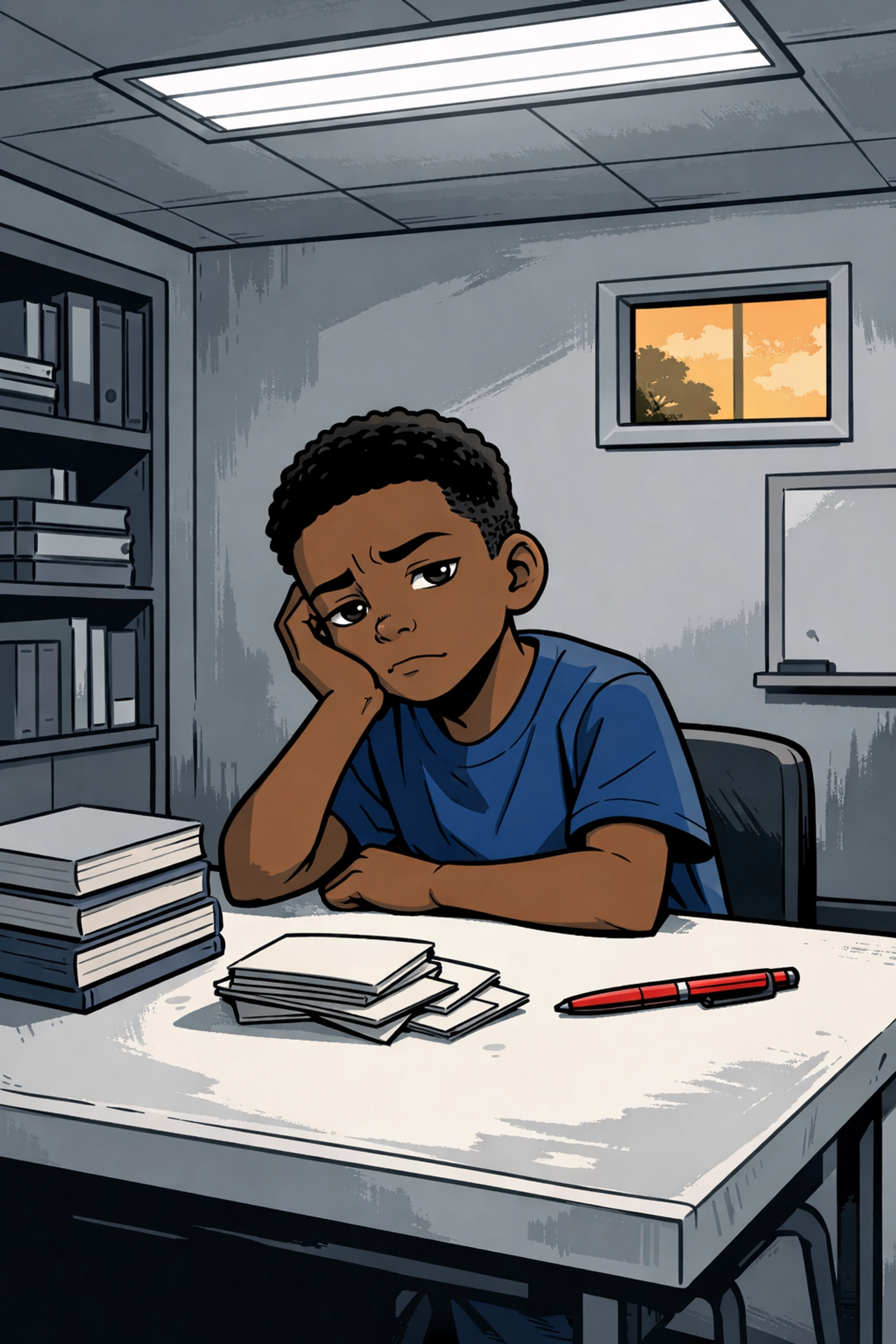
It's not that tutors are ineffective or uncaring. Many are exceptional educators who genuinely want to help. But when we focus exclusively on reading proficiency without addressing reading identity, we're treating the symptom instead of the root cause.
Research from New York University confirms what CRC has witnessed firsthand: children need to feel like readers before sustained academic progress can occur. As one study noted, "If as soon as the school day ends kids don't want to touch a book, and as soon as the school year ends they are not reading anything at all, then a lot of those gains in proficiency are lost."
The tutoring model often misses this crucial truth: that reading confidence isn't built through worksheets and corrections alone, but through community, representation, and genuine enjoyment.
The Barbershop Revolution: Where Reading Becomes Community
Now picture a different scene entirely.
Your son walks into his neighborhood barbershop on a Saturday morning. The familiar buzz of clippers fills the air. He daps up his barber: a man he trusts, someone who knows his name, remembers his basketball game from last week, and asks about his little sister. While waiting his turn, he picks up a book from the shelf: not because he has to, but because it's just there, and the cover shows a kid who looks like him doing something cool.
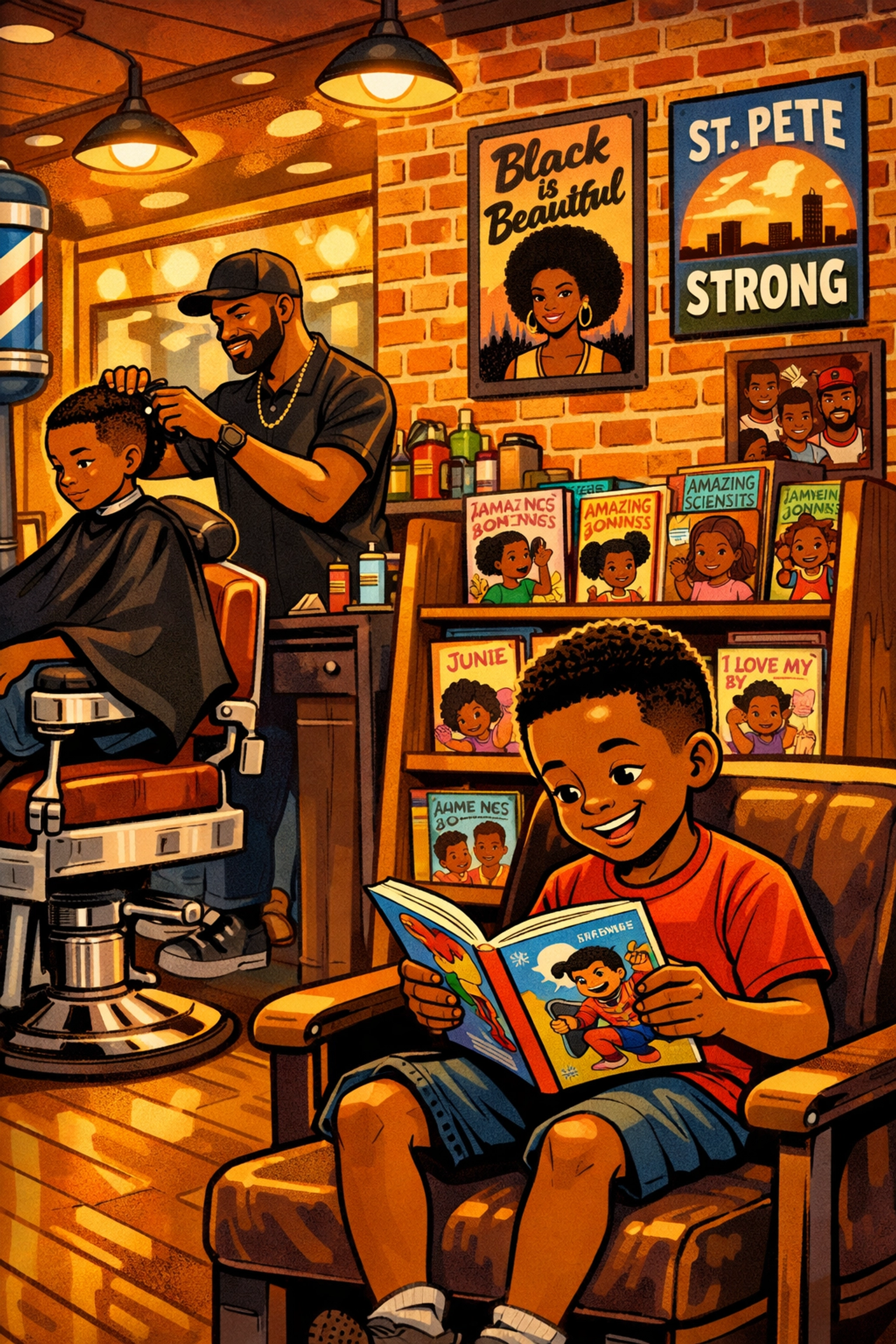
No pressure. No grades. No red pen markings. Just a story, a comfortable chair, and a community space where he already feels like he belongs.
This is the genius of CRC's FROM THE BARBERSHOP TO THE BOARDROOM program and the broader barbershop literacy movement happening across Pinellas County. By meeting boys in culturally relevant spaces: places they already associate with confidence, community, and positive male energy: reading stops feeling like work and starts feeling like what it should be: an enjoyable part of life.
In barbershops, books are conversation starters. Barbers ask about what kids are reading. Other customers jump into discussions about favorite characters or plot twists. Reading becomes social, communal, and cool. The same boy who shut down during tutoring suddenly has opinions about which book is better and why.
Identity First, Skills Second: The CRC Philosophy
The Competitive Readers Coalition operates on a transformative principle: when children identify as readers, reading naturally becomes part of their lifelong journey.
This identity-first approach differs fundamentally from traditional intervention models. Rather than focusing primarily on phonics drills, comprehension quizzes, and standardized test preparation, CRC prioritizes cultivating a positive reading identity. The organization recognizes that a boy who sees himself as "a reader" will voluntarily practice, explore new books, and develop skills organically over time.
The data backs this philosophy. Students participating in barbershop literacy programs scored statistically higher in identifying themselves as readers compared to control groups. Perhaps more importantly, they viewed reading as "fun and cool": descriptors rarely associated with tutoring sessions.
Through CRC's comprehensive programming: including FROM THE BARBERSHOP TO THE BOARDROOM, Youth Workforce Development and Training, Financial Literacy and Homeownership Program (in partnership with LMCU), and community events like the monthly Books & Beyond gatherings: boys in Pinellas County encounter reading in diverse, empowering contexts. They see that literacy isn't confined to classrooms; it's a tool for navigating barbershop conversations, building wealth, launching careers, and shaping their futures.
The Mentor Factor: Why Barbers Succeed Where Others Struggle
Here's a sobering statistic: less than 7 percent of public school teachers are Black men. For many young Black boys, their barber may be one of the only consistent male role models in their lives: someone they see regularly, trust deeply, and aspire to emulate.
Barbershops are natural mentoring spaces. Boys bond with their barbers over months and years of regular visits. These relationships create a foundation of trust that's difficult to replicate in formal educational settings, particularly when tutors change frequently or lack cultural connection with their students.
When a barber recommends a book, it carries weight. When he talks about his own reading journey: the books that changed his perspective, the skills he's learning, the dreams he's pursuing: boys listen differently than they do to another adult telling them what they should do.
CRC amplifies this organic mentoring by equipping barbershops with carefully curated book collections featuring BIPOC protagonists, diverse narratives, and culturally relevant content. Barbershops become literacy hubs where boys see themselves reflected not just in the people around them, but in the stories they encounter.
The impact extends beyond reading. Through these trusted relationships, boys absorb broader life lessons about professionalism, goal-setting, and community engagement: competencies central to CRC's Youth Workforce Development and Training program. The barbershop becomes a training ground for life skills, with reading as the through-line connecting it all.
Proven Results from St. Petersburg's Barbershops
The numbers tell a compelling story. Among children participating in barbershop literacy programs:
93% reported finding reading fun
85% identified as readers
Participants showed measurably higher reading identity development compared to traditional interventions
But statistics only capture part of the transformation. Parents report sons who previously resisted bedtime stories now asking for "just one more chapter." Teachers notice increased classroom participation and willingness to tackle challenging texts. Boys themselves describe feeling "smarter" and more confident: not because someone drilled skills into them, but because they finally see themselves as capable, curious readers.
This shift represents exactly what CRC means by reading identity development. When boys internalize the belief that they are readers: not that they're struggling students who need fixing: everything changes. Reading stops being something imposed on them and becomes something they choose for themselves.
Word of the Day: Erudition
Erudition (noun): Profound knowledge acquired through extensive reading and study; scholarly learning.
At CRC, we believe every boy deserves the opportunity to develop true erudition: not just basic literacy, but the deep, joyful engagement with ideas that comes from a lifetime of reading. Our eight-program family: from FROM THE BARBERSHOP TO THE BOARDROOM to the Financial Literacy and Homeownership Program: works together to build erudition from the ground up.
True erudition doesn't begin with advanced texts or academic pressure. It begins in a comfortable chair, with a book that speaks to your experience, surrounded by people who believe in your potential. It begins when reading stops feeling like a chore and starts feeling like power.
Your Son Doesn't Hate Reading: He Hates How Reading Has Been Presented
If your son claims to hate reading, consider this: he might not hate books at all. He might hate the anxiety of being corrected, the boredom of irrelevant material, or the isolation of struggling alone with something that should be shared and celebrated.
The barbershop model works because it removes those barriers. It makes reading social, voluntary, and culturally affirming. It positions boys as capable from the start, worthy of the best stories and the most vibrant conversations.
The Competitive Readers Coalition brings this transformative approach to communities across St. Petersburg and Pinellas County. Through partnerships with local barbershops, community events like Books & Beyond, and comprehensive programming that connects literacy to workforce readiness and financial empowerment, CRC is rewriting the narrative about who gets to be a reader: and where reading happens.
Your son doesn't need another tutor. He needs a community that sees his brilliance, mirrors his identity, and makes reading an adventure rather than an obligation. He needs the kind of support that happens naturally when we meet boys where they are, in spaces they trust, with stories that reflect their lives and aspirations.
That's what happens in barbershops. That's the CRC difference. And that's why boys who once claimed to hate reading are now asking what book comes next.
Ready to support literacy programming that truly works? Learn more about The Competitive Readers Coalition's community-centered approach at crcbooks.org or join the conversation in our forum.
Connect with us:LinkedIn
Comments