


Word of the Day: Lexicon
- Antonio Brown
- Jan 30
- 4 min read
Professor Antonio says:"Your lexicon is your superpower. The more words you own, the more of the world you can claim."
The Word That Holds All the Words
Let's talk about the most powerful tool you carry with you everywhere: your lexicon.
Pronunciation: LEK-sih-kon
What it means: The vocabulary of a person, language, or branch of knowledge. Simply put, your lexicon is your personal word-bank: every single word you know, understand, and can use.
Here's the thing about your lexicon: it's not fixed. It's not something you're born with and stuck with forever. Your lexicon is alive. It grows every time you read a new book, have a deep conversation, or hear someone use a word you've never encountered before. It expands when you're curious and shrinks when you stop feeding it.
And here's why that matters for our sons, our families, and our communities: the size of your lexicon directly impacts how clearly you can express yourself, how confidently you can lead, and how powerfully you can advocate for what you need.
Every new word you learn expands your lexicon and your power to lead.
Why Your Word-Bank Is Your Secret Weapon
Think about it this way: words are tools. The more tools you have, the more problems you can solve and the more things you can build.
A young man with a rich lexicon can:
Articulate his ideas in a job interview instead of stumbling through it
Advocate for himself in school when he needs support
Express his emotions in healthy ways instead of letting frustration build up
Connect with mentors who can open doors for him
Read and understand complex information that affects his life: contracts, financial documents, college applications
Research consistently shows that vocabulary size is one of the strongest predictors of academic success. But it goes way beyond grades. When you have the words to describe your experiences, your dreams, and your boundaries, you have the power to shape your own story.
That's what we mean at The Competitive Readers Coalition when we talk about identity-centered programming. We're not just teaching kids to decode letters on a page. We're helping them build the internal resources: starting with their lexicon: to see themselves as readers, leaders, and change-makers.
Two Lexicons You Need to Know About
Here's something fascinating: you actually have two types of lexicons working for you.
Your Mental Lexicon
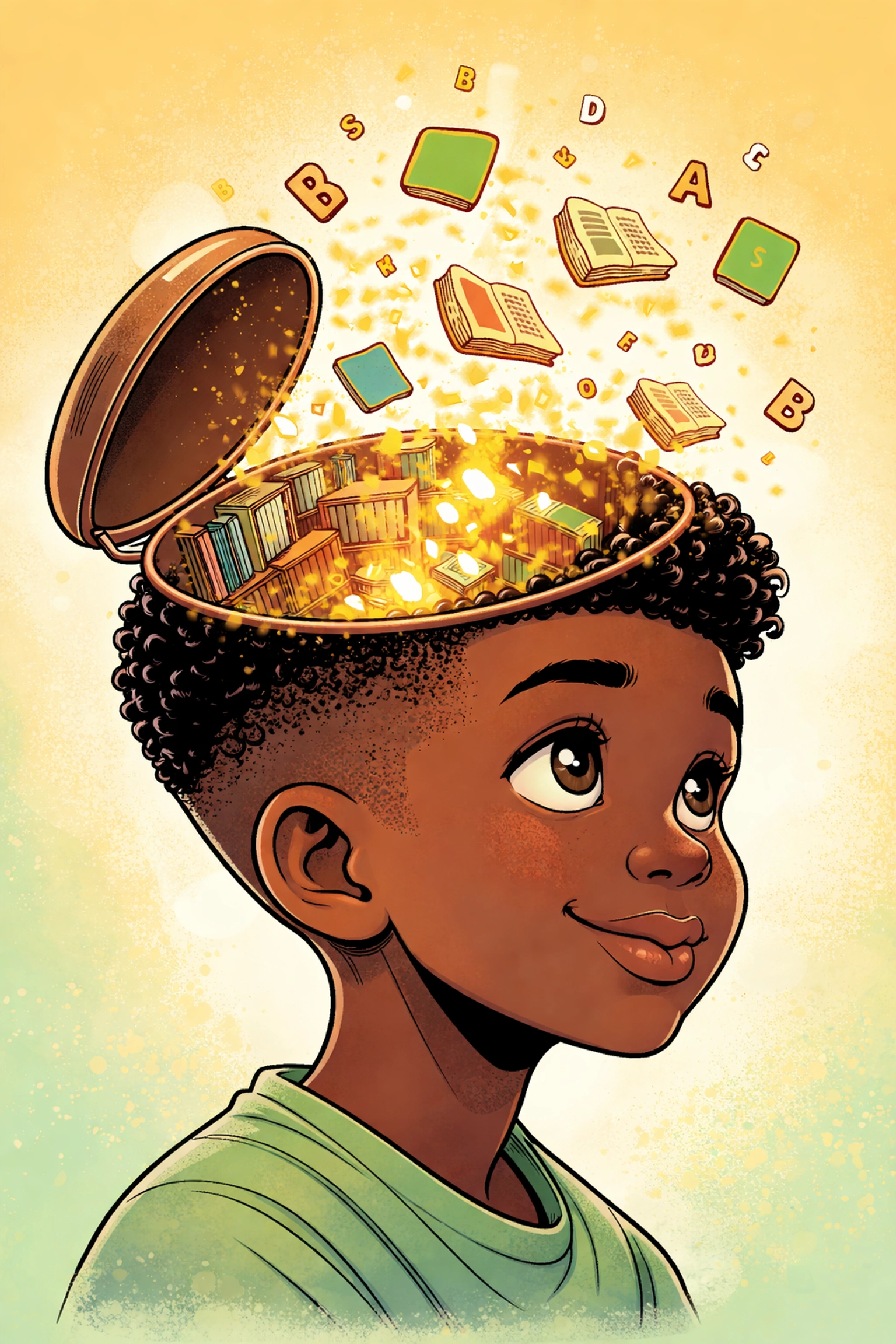
This is the internal database in your brain. It contains every word you've ever learned, their meanings, how to pronounce them, and how to use them in different contexts. Your mental lexicon is constantly updating. Every time you encounter a new word and make sense of it, your brain files it away for future use.
The cool part? Your mental lexicon doesn't just store words in a big alphabetical list like a dictionary. It connects them in webs of meaning. So when you learn the word "magnanimity" (shoutout to Day 6!), your brain links it to related concepts like generosity, leadership, forgiveness, and strength. The richer your lexicon, the more connections your brain can make: and the more creative and flexible your thinking becomes.
Printed Lexicons
These are the external resources: dictionaries, thesauruses, glossaries, and yes, the books on your shelf. They're tools that help you expand your mental lexicon. When you look up a word you don't know, you're literally downloading new vocabulary into your brain's database.
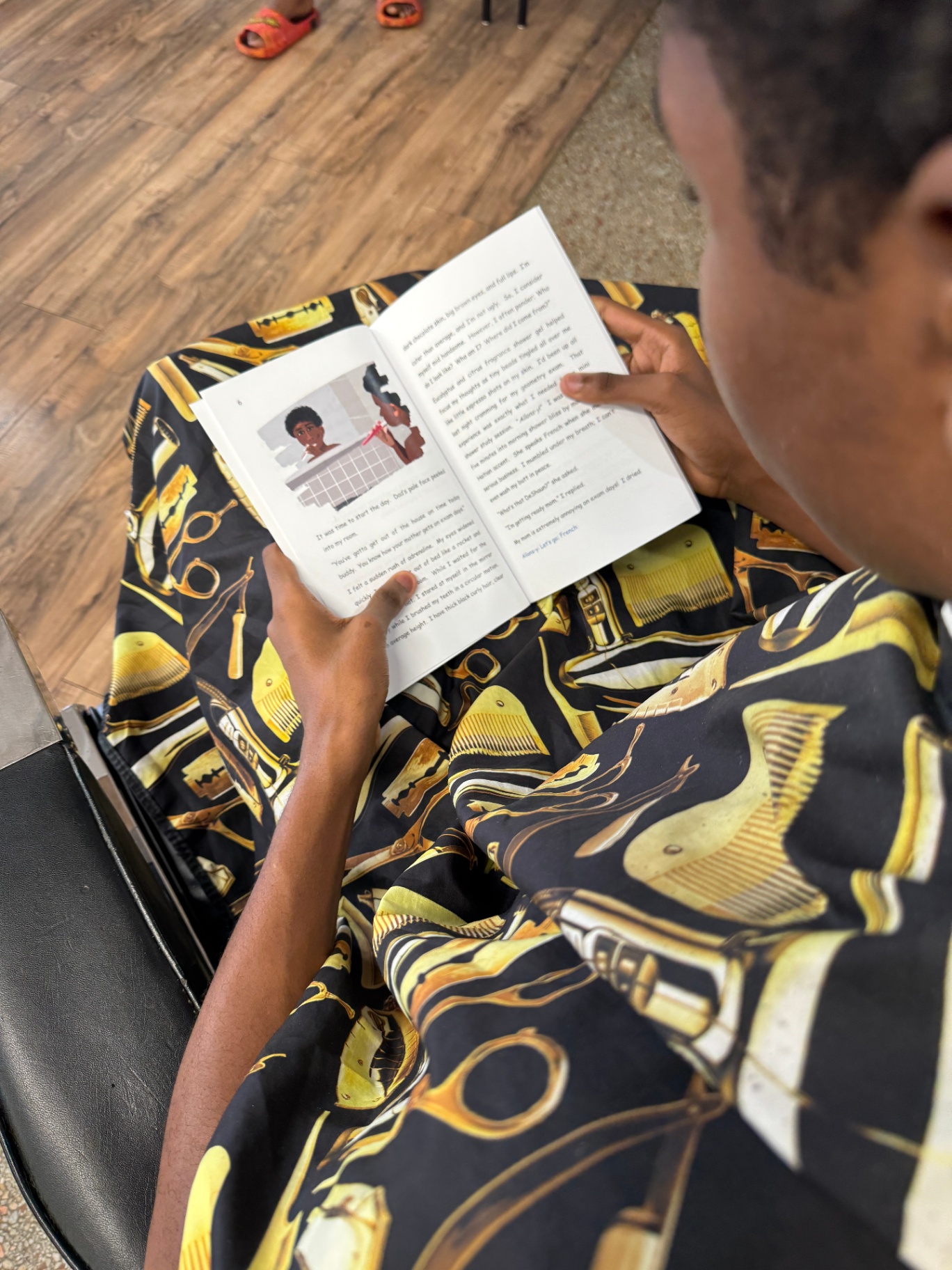
At CRC, we put books directly into the hands of young people because we understand that access to printed lexicons is access to power. Every book is a chance to encounter new words, new ideas, and new ways of seeing the world.
Try It at Home: The 60-Second Lexicon Challenge
Ready to put this into practice? Here's your challenge for today:
Ask your family: "What are three cool new words we can use together this week?"
Write them down. Put them on the fridge. Use them at dinner, in the car, before bed. Make it a game: whoever uses all three words naturally in conversation by the end of the week gets to pick the next three.
Here are some starter words if you need inspiration:
Resilience – the ability to bounce back from challenges
Catalyst – something that causes change
Flourish – to grow and thrive
The goal isn't to sound fancy. The goal is to expand what's possible: for your thinking, your communication, and your confidence.
Your Lexicon Is Your Legacy
Here's the beautiful thing about vocabulary: it's something you can give away without losing any of it yourself. When you teach a child a new word, you both get to keep it. When you model rich language at home, your whole family benefits. When communities invest in literacy, everyone's lexicon grows.
At CRC, we believe that every young person deserves a lexicon that matches their potential. A vocabulary that lets them dream big and then articulate exactly how they're going to make those dreams real.
Your lexicon is your power. Your lexicon is your voice. Your lexicon is your legacy.
What word will you add to yours today?
This post is part of CRC's Word of the Day series, designed to build vocabulary and reinforce identity-centered programming for boys, young men, and families. Explore more atcrcbooks.organd discover how we're bringing literacy into barbershops and trusted community spaces across Pinellas County and beyond.
Comments